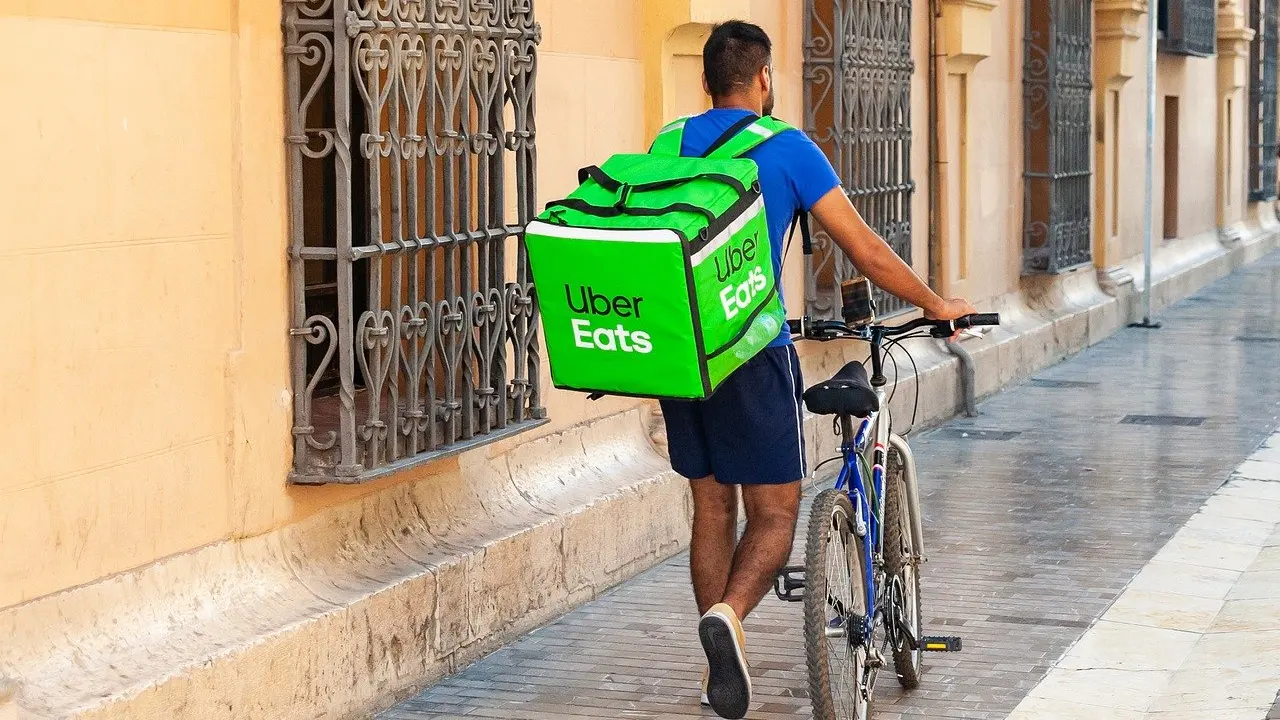
What is gig economy jobs really asking? Work done outside traditional, long-term, direct-hire employment, where classification as employee or independent contractor decides the tax form and legal protections that apply.
Classification rules sit at the center of broader digital economy policy. This guide explains how gig work is defined, how workers are classified, what the pay and enforcement evidence shows, and how to weigh the trade-offs.
How gig work is defined
The gig economy covers income-generating activity outside traditional, long-term, direct-hire employment. The Gig Economy Data Hub uses the term interchangeably with non-standard work and notes that definitions differ. Some focus on the arrangement, some on the worker’s employment classification, and some on the characteristics of the work itself.
Because definitions vary, the useful test is the worker’s own situation. The same data hub gives one fixed point: a rideshare driver classified as an independent contractor counts as a gig worker under any definition. Drivers on platforms such as Uber are the standard example of that case.
The practical difference from a regular job is who carries the structure. An employer normally supplies a payroll relationship and a schedule. One commentary from the OPEX Society argues that a fixed work schedule is largely absent for people in the gig economy. A platform worker has to build their own routine and income stream from whatever tasks are available. That is why classification, covered next, matters so much.
Classification: employee or independent contractor
Classification is the mechanism that turns a task-based arrangement into a set of legal rights or the lack of them. The chain works in four stages:
- The platform or client sets the arrangement. A company posts or assigns work and decides whether it treats the worker as a direct employee or as a contractor.
- Classification determines paperwork. Employees receive W-2 forms from their employers. Workers who perform services for a company without being a direct employee receive 1099 forms, and no payroll tax is withheld from their pay.
- Classification determines protections. Employees are covered by employment protections such as minimum wage and anti-discrimination protections. Contractors are expected to control their own working conditions but lack those protections.
- Jurisdiction can change the answer. State rules, such as California’s, can override a company’s own label.
The figures and rules in the first three stages come from the Gig Economy Data Hub.
Status comparison
| Status | Tax form | Protections | Planning use |
|---|---|---|---|
| Employee | W-2 from the employer | Covered by minimum wage and anti-discrimination protections | Pay and benefits rules follow the job; little record-keeping falls on the worker. |
| Independent contractor | 1099; no payroll tax withheld | Expected to control working conditions, but lacks employment protections | Set money aside for tax yourself and keep your own earnings records. |
| App-based driver or courier in California under Prop 22 | Remains an independent contractor | Law requires 120% of minimum wage for driving time, plus health care stipends | Check whether pay statements actually reflect the guaranteed wage. |
Employee and contractor rows draw on the Gig Economy Data Hub, and the Prop 22 row on CalMatters reporting.
California’s ABC test
California uses the ABC test to determine legal independent contractor status, according to the UC Berkeley Labor Center. It is a stricter default than a company simply choosing a label. The Labor Center also reports that the vast majority of independent contractors in California are still covered by the ABC test. The notable exception is the app-based sector covered by Prop 22.

Prop 22: the California exception
Prop 22 carves out an exception from state labor law for app-based transportation and delivery companies. It allows them to keep classifying workers as independent contractors rather than employees, the Berkeley Labor Center explains. CalMatters summarizes the bargain: gig workers remain independent contractors but are supposed to be treated better. One example of the improvement is a wage floor of 120% of minimum wage for time spent driving.
Workers allege that Uber, Lyft and Instacart failed to provide the higher wages and health care stipends the law promises. Companies say the law has helped gig workers hang on to work they can do whenever they want.
What enforcement looks like
CalMatters reports that workers have filed 54 claims related to Prop 22 since it took effect in December 2020, and state records show at least 32 are unresolved. The state Industrial Relations Department now says it does not have jurisdiction to resolve claims related to Prop 22. State agencies cited a July 25 California Supreme Court ruling that upheld the law. For a worker, a guaranteed wage on paper is worth less if there is no clear route to enforce it. That gap is a risk to weigh before depending on app work for core income.
The scale is large: CalMatters refers to more than 1 million gig workers in California. In a review of nearly 200 gig wage claims, 54% were against Uber, and the value recorded for Lyft is 25%. That concentration shows how dominant a few platforms are in this market.
What the pay evidence shows
Headline hourly rates are a poor guide, because the Berkeley Labor Center finds that typical drivers earned less than the applicable minimum wage in all five metros it examined. In Seattle, typical delivery drivers’ earnings would have been below the city minimum wage, using January 2022 data. Those findings concern specific places and periods, so they are warnings rather than universal rates. They do show why the gap between gross task pay and net pay after costs deserves scrutiny.
The same Labor Center work looks at what happens when classification changes the cost to platforms. It estimates that if drivers had been treated as employees, Uber and Lyft would have paid $413 million into the state unemployment insurance fund from 2014 to 2019. Contractors have no such fund contributions made for them. It also reports that under a proposed Massachusetts ballot measure, the majority of drivers could earn as little as the equivalent of a $4.82 wage. Read that as a projection tied to one proposal, not a standing rate.
Pros and cons of gig work
Where gig work helps
- Flexibility. Companies argue that contractor-based models let workers do the work whenever they want, according to CalMatters. This is the strongest argument for the model, though it is the companies’ claim.
- Control in principle. Contractors are expected to control their own working conditions, as the Gig Economy Data Hub describes.
- Quick entry. Platform work is accepted per task, so a person can try it without a long hiring process.
Where it costs you
- Missing protections. Contractors lack the minimum wage and anti-discrimination coverage that employees have.
- Tax burden. With no payroll tax withheld and a 1099 at year-end, you must handle tax and record-keeping yourself.
- Pay below minimum wage. The Berkeley Labor Center’s findings above show typical drivers falling under the applicable minimum wage in the metros studied.
- Weak enforcement routes. The Prop 22 claims record shows how hard it can be to resolve a pay dispute.
- No fixed schedule. The OPEX Society commentary treats this as a loss compared with traditional firms, although some workers will see it as a benefit.
Deciding whether gig work fits
Gig work suits people who need flexibility, can absorb income swings, and are willing to run their own tax and records. It is a poor fit as a sole income if you depend on guaranteed minimum pay and benefits. Before accepting a platform, take these steps:
- Check your classification. Find out whether you will receive a W-2 or a 1099, because that sets your protections and tax duties.
- Know your jurisdiction. Rules differ by place: California applies the ABC test with a Prop 22 exception, and other places may differ.
- Work out net pay. Subtract expenses and tax from the gross task rate before comparing platforms, since gross rates alone can mislead.
- Keep records. A contractor’s earnings and costs are the evidence for taxes and for any pay dispute.
Platform terms shape what workers and customers can do in other parts of the digital economy too. DRM Digital Rights Management Explained: What It Means for Creators and Consumers in 2026 – Technopolicy covers that issue for digital content. A related debate over who controls devices is explained in Right To Repair Act Explained: What It Means For Consumers, Businesses, And Devices In 2026 – Technopolicy.
Frequently asked questions
Is every rideshare driver a gig worker?
A rideshare driver classified as an independent contractor counts as a gig worker under any definition, according to the Gig Economy Data Hub. Other arrangements depend on which of the three definition approaches (arrangement, classification or work characteristics) is used.
Does the ABC test still matter in California?
Yes. The Berkeley Labor Center’s June 2023 brief says the vast majority of California independent contractors remain covered by the ABC test after AB 2257. App-based transport and delivery companies fall under the Prop 22 exception instead.
Can the state labor department resolve a Prop 22 wage claim?
CalMatters reports that the state Industrial Relations Department now says it lacks jurisdiction over Prop 22 claims. State agencies pointed to a July 25 California Supreme Court ruling upholding the law.
Do gig workers get employer-withheld payroll tax?
Not as contractors. Workers who receive 1099 forms have no payroll tax deducted, so they need to plan for tax themselves.