E-commerce trends shape how retailers sell and how consumers buy in 2026. This article names the core shifts and explains practical steps retailers can take. It covers personalization driven by AI, omnichannel and social selling, and fulfillment plus data strategies. Readers will get clear examples and actions they can use this year.
Key Takeaways
- AI-driven hyper-personalization enhances e-commerce by tailoring product suggestions and prices based on customer intent and behavior, driving higher conversions.
- Omnichannel commerce and social selling expand reach by synchronizing inventory and offering consistent experiences across sites, marketplaces, and social platforms.
- Centralized inventory management and real-time syncing reduce overselling and improve fulfillment efficiency.
- Micro-fulfillment centers and local partnerships speed up delivery, lower shipping costs, and meet growing consumer expectations for fast shipping.
- Sustainability initiatives such as recyclable packaging and carbon impact transparency increase brand trust and appeal to eco-conscious shoppers.
- Building first-party data strategies with clear consent enables personalized experiences while respecting privacy and adapting to declining third-party cookie use.
Hyper-Personalization And AI-Driven Shopping Experiences
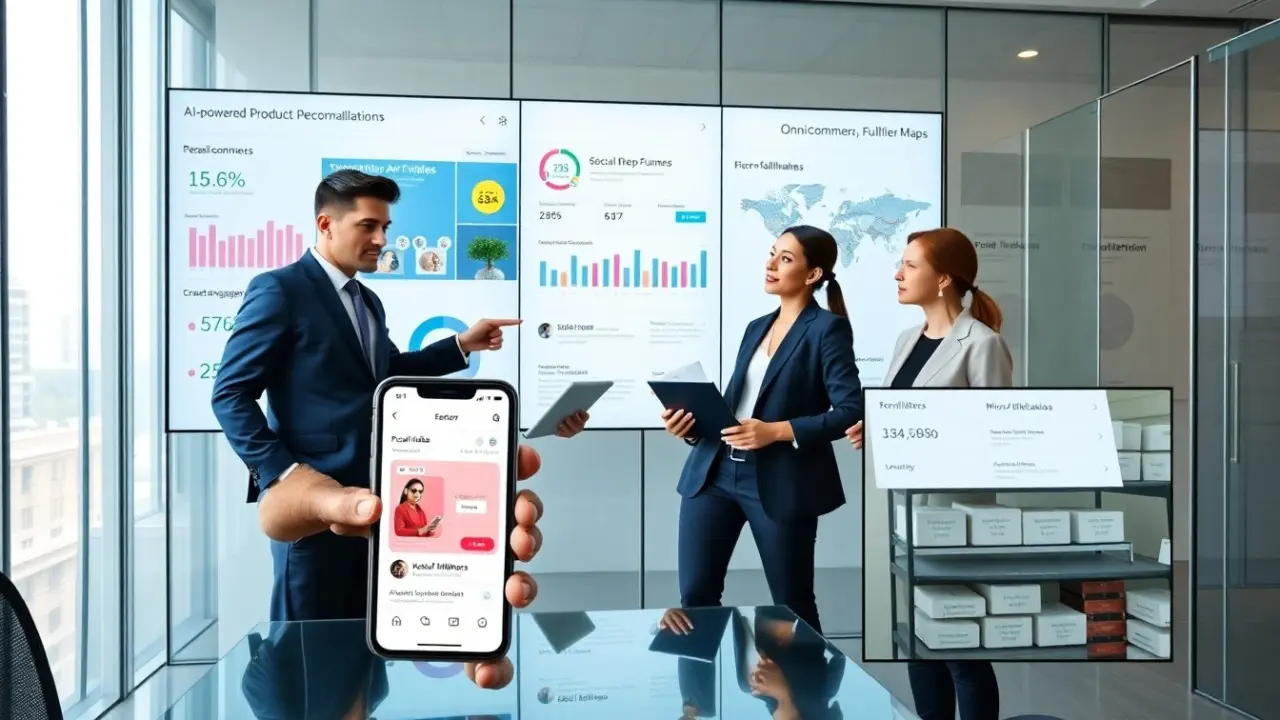
Retailers face new e-commerce trends that put personalization first. AI analyzes customer data and predicts intent. It serves product suggestions, adjusts prices, and personalizes search. Retailers use small data points such as recent views and cart history. They then craft offers that match intent and budget.
AI also changes product discovery. It powers visual search and voice search. Shoppers photograph an item and the system returns similar products. Shoppers speak a request and the system refines results. These features reduce friction and increase conversion.
Retailers should test AI models on narrow use cases first. They should measure lift in click-through and conversion rates. They should audit models for bias and accuracy. They should keep a human review step for promotional content.
Privacy rules affect how personalization works. Retailers must collect consent and explain data use. They must offer simple opt-outs. First-party data and on-site signals gain value as third-party cookies decline. Retailers should ask for email and behavioral consent in exchange for clear value, like faster checkout or discounts.
Practical steps:
- Map customer journeys and tag high-value signals.
- Start with AI recommendations on one category and measure results.
- Offer clear data-use explanations and easy consent controls.
- Use visual and voice search to lower friction.
These measures align with current e-commerce trends and help retailers convert smarter and retain customers longer.
Omnichannel Commerce, Social Selling, And New Marketplaces
Omnichannel is a central e-commerce trend in 2026. Retailers sell on site, marketplaces, social platforms, and physical pickup points. They keep inventory visible and prices consistent across channels. Customers expect the same product details, reviews, and promotions everywhere.
Social platforms double as discovery and checkout points. Shoppers click an ad, see a product page inside the app, and complete a purchase without leaving. Retailers create short video clips and user-generated content to feed social algorithms. They work with creators to reach niche audiences and to add authentic reviews.
New marketplaces target vertical audiences. Retailers join specialized marketplaces to reach focused buyers. These marketplaces offer curated experiences and higher conversion for niche products. Retailers evaluate fees, traffic quality, and fulfillment options before they join.
Retailers that manage inventory centrally reduce oversell and stockouts. They use a single inventory feed that updates marketplaces and social stores in real time. They also route orders to the nearest fulfillment point to cut costs and delivery time.
Practical steps:
- Centralize inventory and sync with channels in real time.
- Test social checkout for one product line before wide rollout.
- Partner with creators and offer affiliate incentives.
- Evaluate niche marketplaces for customer fit and fees.
These moves match e-commerce trends and help retailers reach shoppers where they spend time and money.
Fulfillment Innovations, Sustainability, And First-Party Data Strategies
Fulfillment plays a larger role in e-commerce trends for 2026. Faster shipping expectations push retailers to use micro-fulfillment centers and local partners. Retailers place small hubs near dense customer areas. These hubs shorten delivery windows and lower shipping costs.
Sustainability affects fulfillment choices. Retailers shift to recyclable packaging and route optimization to reduce emissions. They show carbon metrics at checkout and offer slower, lower-cost shipping as an option. Some retailers add a donation or tree-planting option on purchase pages.
Returns remain a top friction point. Retailers streamline returns with prepaid labels, local drop-off, and instant store credit. They use return data to fix product descriptions and sizing guidance.
First-party data becomes a key asset. Retailers collect email, purchase history, and on-site behavior and link these signals to a customer profile. They use these profiles to power on-site personalization and to seed privacy-safe ad audiences.
Retailers should follow clear steps:
- Test micro-fulfillment in one metro area and measure margin impact.
- Add carbon and shipping options at checkout with clear trade-offs.
- Simplify returns and analyze return reasons monthly.
- Build a first-party data plan with consented email capture and behavior tracking.
These actions match major e-commerce trends and help retailers cut cost while improving customer loyalty.