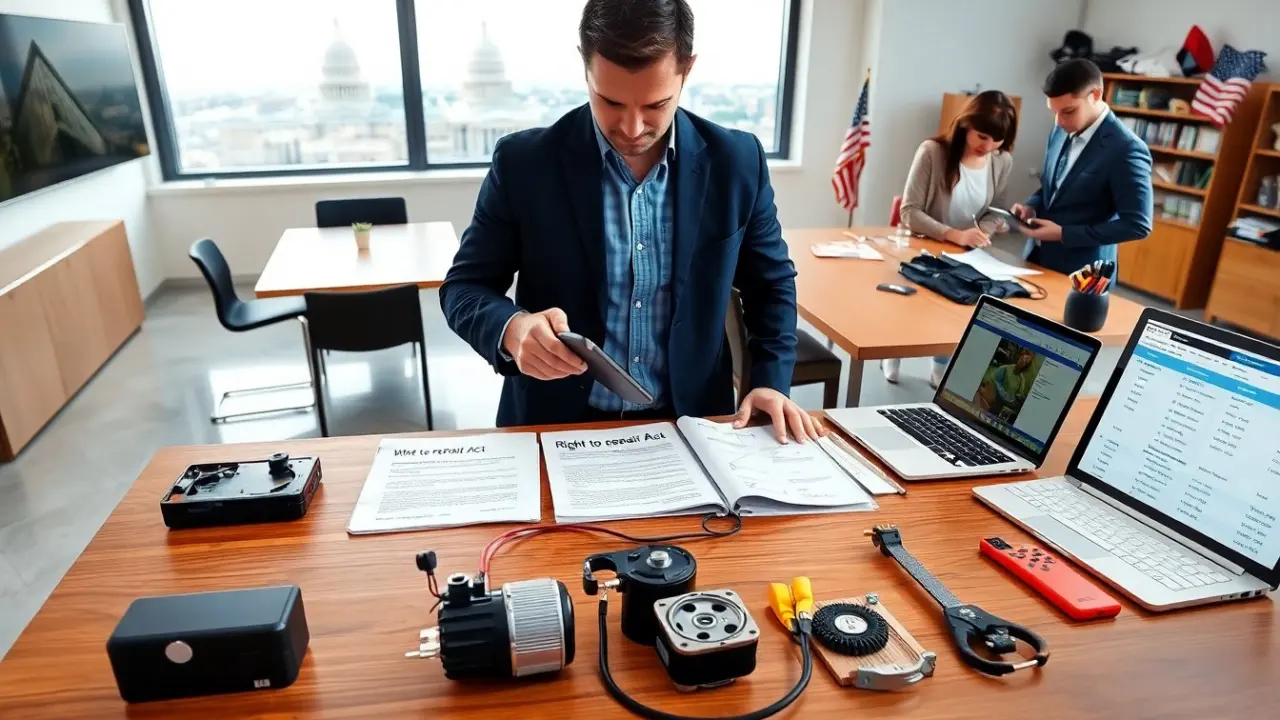
what is the right to repair act explains who can fix devices and why that matters. The question guides consumer choices and business rules because it speaks to access: who may open a device, obtain replacement parts, and use diagnostic tools. The article defines the law, lists core provisions, shows who qualifies, and gives practical steps for asserting repair rights. It also outlines common tradeoffs and how to make repair decisions for different device types. Readers will learn clear actions they can take for phones, tractors, and appliances as well as how to document requests and escalate problems when access is denied.
Key Takeaways
- The Right to Repair Act ensures consumers and independent shops can access parts, tools, and information needed to fix devices, empowering more repair options and lowering costs.
- Modern right to repair laws require manufacturers to provide fair pricing on genuine parts, repair manuals, and diagnostic tools to support repairs.
- The law typically covers consumer electronics, appliances, and farm equipment, promoting repair over replacement to reduce waste and extend device life.
- Consumers benefit from reduced repair costs, faster local service, and extended device lifespan while supporting local businesses and environmental sustainability.
- Manufacturers express concerns about security and warranties, leading laws to include safety and data protection requirements for repairers.
- Consumers should verify their rights, document requests for repair resources, and choose between manufacturer services and local shops based on transparent quotes.
What The Right To Repair Act Is And Why It Matters
At its core, what is the right to repair act asks whether device owners and independent repair businesses can access the parts, tools, and information necessary to diagnose and fix products without being forced to use a manufacturer’s authorized service only. The law is designed to shift some control from manufacturers to users and local businesses by mandating access to replacement components, repair documentation, and diagnostic interfaces. That matters for several reasons: it can lower repair costs, reduce the frequency of full-device replacements, preserve consumer choice, and keep working equipment in use longer. For communities it can mean more local jobs and for governments it can mean less electronic waste to manage. Because the changes can affect intellectual property, safety, and business models, the right to repair sits at the center of debates among consumers, repair advocates, manufacturers, and policymakers.
Core Provisions Of Modern Right To Repair Laws
Modern right to repair laws typically require manufacturers to make available to owners and independent repair providers a set of resources needed for safe and effective repairs: genuine replacement parts, diagnostic software or access to diagnostic modes, service manuals and wiring diagrams when they exist, and a way to obtain necessary special tools or firmware updates. Many statutes also address pricing transparency and reasonable timelines for making parts available after a product launch. To prevent workarounds that block repair, laws increasingly ban practices such as purposeful software locks or design choices that make disassembly impossible without proprietary tools. Enforcement mechanisms vary — some laws depend on regulators issuing fines or orders, others create private rights of action so consumers or repair shops can seek remedies — and many include carve-outs or procedures for handling safety-sensitive or medical devices.
Required Parts, Tools, Manuals, And Diagnostic Access
When the statute says required parts, tools, manuals, and diagnostic access, that can include manufacturer-branded spare components, compatible third-party parts where appropriate, access to repair guides and schematics, and interfaces for reading error codes or running tests. Practical implementations often specify how long after a product release parts must remain available and whether replacement batteries, screens, or circuit boards must be sold to the public as well as to authorized dealers. Diagnostic access can mean web portals, codes, or special service modes; the law may set limits to protect user data and device security while still enabling legitimate repairs. For repair shops, these resources reduce guesswork and help produce reliable repairs; for consumers, they provide the information needed to understand quotes and expected outcomes.
Who And What Devices Are Covered
Coverage is commonly broad but varies by statute and rulemaking. Many right to repair laws target consumer devices such as smartphones, tablets, laptops, and household appliances like refrigerators and washing machines; others explicitly include agricultural equipment like tractors and certain commercial machines. Some statutes carve out medical devices, aviation components, or products where repair could create an immediate public safety risk; regulators may develop categories and timelines that phase in requirements by device class or model year. Repairers and consumers should consult the specific law text or agency guidance to confirm whether a particular device, model, or service activity is covered, and to learn about any licensing, certification, or recordkeeping obligations that apply.
Benefits For Consumers, The Environment, And Local Repair Shops
The right to repair act, when implemented, can deliver multiple overlapping benefits. For consumers it typically means lower prices for common fixes, more repair options (including local shops), and the ability to keep older devices in service longer. For the environment, greater repairability reduces electronic waste, slows resource depletion by extending product lifecycles, and often lowers the carbon footprint associated with manufacturing and shipping replacements. Local repair businesses gain clearer access to supply chains and diagnostic information, which can increase competition, create jobs, and strengthen local economies. Secondary markets for refurbished and resold devices can also expand when products are easier to maintain, helping consumers on limited budgets and creating new small-business opportunities.
Common Concerns From Manufacturers
Manufacturers commonly raise concerns about security, safety certifications, and the protection of proprietary technologies. They argue that unrestricted access to diagnostic interfaces or firmware could increase the risk of device tampering, data breaches, or safety failures if repairs are performed incorrectly. They also point to warranty management complexity and potential liability issues when third parties perform work. Policymakers often address these concerns by writing conditions into the law — for example, requiring repairers to follow documented safety procedures, to complete training or registration where appropriate, to obtain customer consent before accessing user data, and to use authenticated parts in certain contexts. The resulting frameworks attempt to balance consumer access with reasonable protections for safety and privacy.
How To Assert Your Rights — Practical Steps For Consumers And Repairers
Consumers and repairers can take concrete steps to assert rights established by the right to repair act. First, learn what the law covers in your jurisdiction and any regulator guidance pages that explain procedures. When you need a repair, document the issue, gather the device serial number and model information, and contact the manufacturer or authorized service to request parts, manuals, or diagnostic access. Send written requests by email and keep copies of correspondence and order or part numbers. If access is denied, file a complaint with the appropriate regulator and preserve any denial letters; some laws allow private claims if regulators do not act. Repairers should ensure they meet any licensing or registration rules, keep records of parts and firmware used, obtain customer authorizations for data access, and provide clear, itemized quotes. Where practical, get estimates from both manufacturer service and reputable independent shops to compare price, parts used, and turnaround time. These steps make it easier to prove a denied request, to seek remediation, and to choose a repair option that fits safety, cost, and data-protection needs.