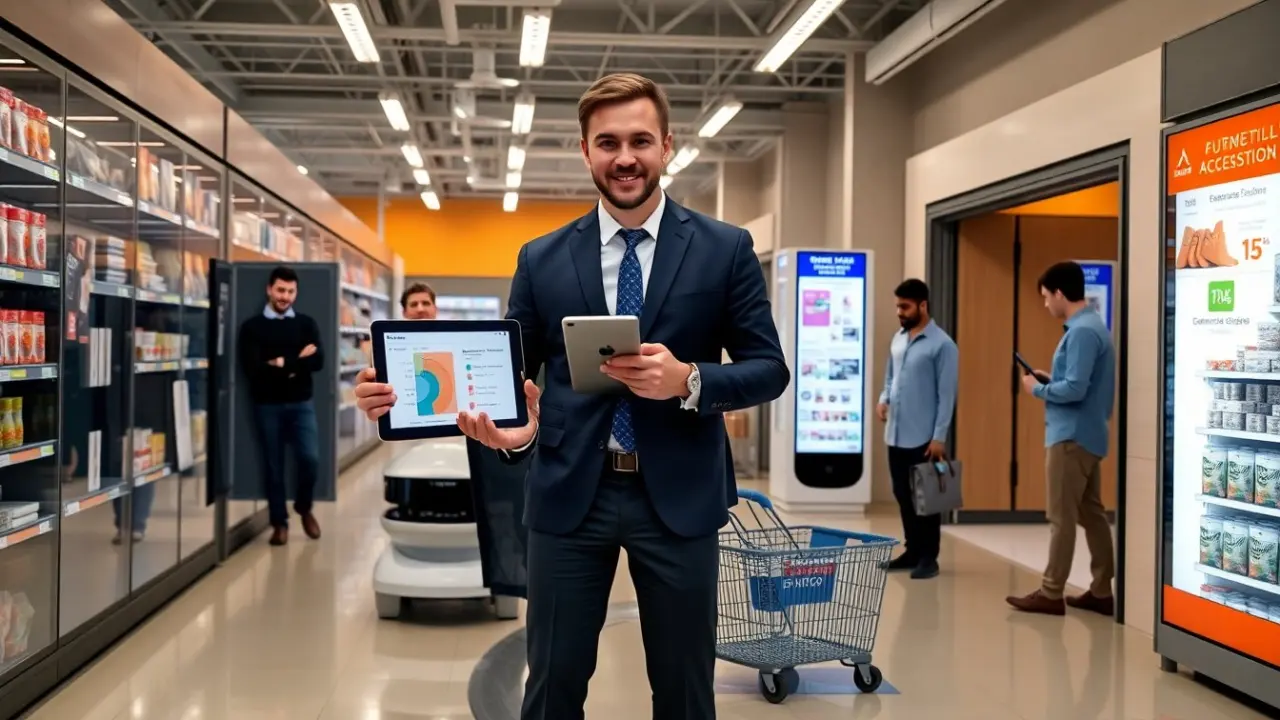
Digital transformation in retail examples appear in stores and online. The article lists nine real examples that changed customer experience in 2026. It shows how companies used technology to speed service, cut friction, and boost sales. Readers will see concrete cases, the tech involved, and the customer impact. The examples use clear metrics and practical detail. Beneath each case are implementation considerations, common pitfalls, and practical takeaways so retail leaders can evaluate which approaches fit their operations and roadmap.
Key Takeaways
- Digital transformation in retail examples show that unifying inventory systems enables seamless omnichannel shopping and reduces cancellations.
- Implementing buy-online-pickup-in-store (BOPIS) with curbside lockers can boost conversion rates by over 20%.
- Using AI-driven demand forecasting and dynamic pricing helps retailers optimize stock allocation and increase revenue without losing customer trust.
- In-store technologies like robots, smart shelves, and contactless checkout cut restocking time, reduce stockouts by 30%, and speed checkout to under 40 seconds.
- Combining CRM, POS, and e-commerce data in a single dashboard improves personalized promotions and reduces advertising waste.
- Automating returns and backroom processes accelerates refunds and expands same-day delivery capabilities, enhancing customer satisfaction.
Omnichannel And Unified Commerce: Seamless Shopping Across Channels
Digital transformation in retail examples often start with omnichannel work. A major retailer unified its inventory system. The system gave accurate stock counts across web, mobile, and stores. Staff checked stock on a tablet. Customers ordered online and picked up in store the same day. That change cut pickup time and reduced cancelations.
These efforts usually entail integrating point-of-sale (POS) systems, warehouse management, and e-commerce platforms so inventory is updated in near real time. Implementation notes include using middleware or APIs to avoid forklift replacements of legacy systems and establishing a single source of truth for SKU data, pricing, and promotions. Key operational KPIs to track are fulfillment accuracy, on-time pickup rate, and order-to-fulfillment cycle time.
Digital transformation in retail examples include buy-online-pickup-in-store (BOPIS) at scale. One chain added curbside lockers. The chain routed orders to the nearest locker automatically. The lockers used simple sensors to confirm pickup. The chain reported a 22% rise in conversion after the locker rollout.
Rolling out BOPIS and locker solutions requires attention to locker sizing, secure access methods, and clear customer communications. Logistics teams should model locker capacity by peak windows and integrate returns flow into the same network. A practical tip: pilot lockers in high-footfall locations and instrument pickup points so product flow and utilization can be measured before a broader roll-out.
Digital transformation in retail examples also cover unified loyalty. A brand merged its app points with in-store receipts. The brand used the merged data to show relevant coupons in the app. Shoppers redeemed coupons at self-checkout with a single QR code. The brand measured higher repeat visits and larger baskets.
For loyalty and personalization, data governance and consent management are essential. When combining app, in-store, and web behavior, define privacy-friendly segmentation and avoid over-personalization that can feel intrusive. Practical steps include reconciling identifiers (email, phone, loyalty ID), synchronizing point accrual rules, and delivering omnichannel redemption paths (mobile, kiosk, or till).
Digital transformation in retail examples show that a single view of the customer matters. Teams combined CRM, POS, and e-commerce data in one dashboard. Managers used that dashboard to match promotions by channel. The result lowered ad waste and raised email open rates.
Operationalizing a single customer view requires cross-functional alignment between merchandising, marketing, and operations. Common challenges include data quality, mismatched product taxonomy, and lag in event streams. Overcome these by establishing canonical product and customer records, automating deduplication, and instrumenting real-time sync for high-impact events such as purchases and returns.
Digital transformation in retail examples highlight simple automation. The system routed returns to the closest warehouse for faster processing. The system reduced return handling time by half. Retailers used that time saving to speed refunds and improve customer ratings.
When automating returns and routing, validate cost-to-serve tradeoffs: sometimes centralized processing is cheaper, but distributed routing speeds refunds and restocks sellable inventory faster. Consider automated inspection workflows, barcode-driven sorting, and integrations with payment processors to accelerate refunds. Monitor refund turnaround time, resale rate of returned items, and customer satisfaction metrics to quantify impact.
In-Store Technology And Automation: Robots, Smart Shelves, And Contactless Checkout
Digital transformation in retail examples include robots that scan shelves. A grocery chain deployed small robots that moved aisles nightly. The robots read shelf labels and report missing items. Employees used the robot reports to restock faster. The chain cut out-of-stock alerts by 30%.
Robotic shelf scanners are valuable for inventory accuracy because they free staff from manual audits and create continuous visibility into planogram compliance. When evaluating vendors, compare sensor resolution, navigation safety features, and data export formats. Integration with replenishment systems lets alerts trigger automatic pick lists for store associates.
Digital transformation in retail examples also show smart shelves with weight sensors. The shelves detected low inventory in real time. The shelves sent alerts to store staff and to the central inventory system. The system reordered popular products automatically. The store kept bestseller items available more often.
Smart-shelf deployments work best when combined with a rules engine that translates sensor signals into actions: restock now, route to backroom, or flag for promo. Consider how sensors handle multi-pack items and how environmental factors (humidity, temperature) might affect readings. Test in a small set of SKUs first and expand to high-velocity items for faster ROI.
Digital transformation in retail examples feature contactless checkout. Several stores added camera-based checkout that tracked items in a basket. The system charged the customer automatically on exit. The stores removed long lines and reduced average checkout time to under 40 seconds.
Contactless and frictionless checkout options range from mobile-pay integrations to camera- and sensor-based systems. Key considerations include loss-prevention controls, clear signage to set customer expectations, and fallback touchpoints for troubleshooting. Integrate receipts and loyalty attribution so purchases properly credit customer accounts and maintain accurate sales reporting.
Digital transformation in retail examples include robotic assistants for customer service. A retail chain used a robot to guide shoppers to products. The robot answered basic questions and connected customers to a staff tablet when needed. The chain saw higher customer satisfaction scores for assisted shoppers.
Deploying customer-facing robots or kiosks should focus on task clarity: wayfinding, upsell prompts, and basic Q&A. Train staff to collaborate with robots and define escalation paths when the robot hands off to a human associate. Measure assisted-conversion lift and time-to-service to quantify benefit.
Digital transformation in retail examples also show backroom automation. Automated storage and retrieval systems picked online orders for same-day delivery. The systems increased picking speed and reduced packing errors. The retailer expanded same-day coverage to more zip codes with the new automation.
Backroom automation projects typically require a detailed mapping of SKU velocity and pick profiles. Modular automation solutions allow retailers to start with a fast-moving SKU subset and scale. Consider footprint, power, and integration with carrier label generation to enable seamless last-mile handoffs. Track picks per hour, error rate, and same-day fulfillment coverage during the rollout.
Data-Driven Personalization And AI: Tailored Offers, Demand Forecasting, And Dynamic Pricing
Digital transformation in retail examples often rely on AI for personalization. A department store used AI to analyze purchase history and browsing signals. The AI sent tailored email offers that matched recent searches. The store raised click-through rates and conversion on targeted offers.
Personalization systems combine deterministic signals (past purchases, loyalty tier) with probabilistic signals (session behavior, inferred intent). Operational advice: define guardrails to avoid sending conflicting offers, batch and real-time inference patterns, and an experimentation framework so you can measure uplift and avoid long-term erosion of margins from discounts.
Digital transformation in retail examples include demand forecasting models. A fashion retailer applied machine learning to predict size demand by region. The model used past sales, weather, and local events. The retailer allocated stock to stores more accurately and dropped markdowns on slow sellers.
Demand forecasting projects succeed when they pair statistical models with domain rules from merchandisers. Include holiday and promotion inputs, test models on held-out seasons, and implement automated alerts for forecast drift. Key outputs should feed replenishment planners and markdown strategies, with clear ownership for model retraining cadence.
Digital transformation in retail examples show dynamic pricing in action. An electronics seller adjusted prices hourly based on inventory and competitor data. The pricing engine kept margins while matching customer expectations. The seller increased revenue per category without harming customer trust.
Dynamic pricing must be balanced against brand positioning and price perception. Implement price-change thresholds, cooling periods, and approval workflows for high-visibility SKUs. Use simulated A/B tests and monitor price elasticity by segment to ensure automated changes align with broader commercial goals.
Digital transformation in retail examples extend to in-app product recommendations. One brand used session-level signals to show complementary items during checkout. The brand increased average order value by suggesting the right add-ons at the right moment.
Recommendation systems benefit from hybrid approaches: collaborative filtering for patterns across shoppers and content-based rules for new-product cold starts. Maintain an offline evaluation pipeline to measure lift and avoid cannibalization of full-price sales via excessive discount bundling.
Digital transformation in retail examples also include fraud detection and churn prediction. Retailers applied AI models to spot suspicious returns and risky accounts. Teams used churn scores to trigger targeted win-back campaigns. The campaigns reduced churn and lowered fraud losses.
Deploy fraud and churn models with human-in-the-loop review for edge cases and clear escalation criteria. Continuously validate models for fairness and bias, and ensure compliance with data protection rules when automating decisions that affect customers.
Digital transformation in retail examples prove that clear data links improve outcomes. Companies connected POS feeds, web logs, and CRM records. Analysts used that combined data to measure lifetime value and to choose the highest-impact experiments. The teams then rolled successful experiments to more stores and channels.
For teams starting with digital transformation in retail examples, prioritize initiatives that unlock immediate operational pain points (inventory accuracy, checkout friction, or returns velocity) while building a scalable data platform. Focus on change management—training store teams, updating SOPs, and defining success metrics—so technology adoption delivers measurable and sustainable business value.