| Effect | Supported figure or finding | Planning use |
|---|---|---|
| Direct US data center water use | 21.2 billion liters in 2014; 66 billion liters in 2023 | Use as the trend line for on-site demand, and expect local utilities to ask about it. |
| Indirect water footprint | About 800 billion liters in the US; the vast majority of a data center’s footprint is indirect | Judge a deployment by its electricity supply as well as its cooling. |
| Water per generative AI use | 500 ml per 10-50 ChatGPT-3 inferences, counting data-centre and electricity-generation water; varies greatly with location and generation method | Treat as an order-of-magnitude estimate, not a per-query guarantee. |
| Cooling choice | Evaporative cooling: lower energy use, higher water loss. Air cooling: relatively little water, but energy-intensive | Match the cooling design to local water and power supply. |
| Company water reporting | Reporting practices vary widely in detail and consistency | Do not rank firms on headline water figures without checking what each figure covers. |
These figures come from the Environmental Law Institute’s analysis of AI’s cooling problem and the International Water Association’s discussion of generative AI’s environmental footprint.
The AI environmental impact water story has a direct layer, the water used on site for cooling, and a larger indirect layer, the water used to generate the electricity. Both vary sharply with location and cooling design.
For the wider policy picture around these trade-offs, start with our guide to ai regulation explained.
Effects on communities and utilities
The practical consequence of AI’s water demand is local: a data center competes with homes, farms and industry for the same supply, and the competition is tightest when the weather is hottest.
Strain in hot months
The Environmental Law Institute notes that local strain often peaks during hot summer months or high electricity demand periods. A University of San Francisco sustainability post adds that data centers are water-intensive, a dilemma exacerbated in hot climates. For a utility, annual averages therefore understate the risk. Planning should look at peak-season capacity, not the yearly total.
Siting and public opposition
ELI reports that more than 160 new AI data centers have sprung up across the US in the past three years, and some of these sites are in water-scarce places. Local acceptance is not guaranteed. Meta cancelled its Zeewolde data centre project later in 2022 after local opposition, according to the University of San Francisco post. Developers who treat water as a late permitting detail risk delay or cancellation, so water availability belongs in the first round of site screening.
Resilience requirements add to on-site demand. The same post says data centres commonly store 10 million gallons of emergency water in case the main system malfunctions. That is a reason for municipalities to ask about storage and refill plans, not only about daily draw.
Growing electricity demand
Because the indirect footprint follows electricity use, the share of power going to data centers matters. ELI says US data centers now make up about 4.4% of national electricity consumption, up from about 1.9% in 2018. Regions that add compute quickly are therefore adding water demand at the power plant as well as at the facility fence.
Direct and indirect water use
Direct use is what the facility consumes on site, mostly for cooling. ELI puts US data centers’ direct consumption at 66 billion liters in 2023, up from 21.2 billion liters in 2014, and estimates an indirect water footprint of about 800 billion liters. It states that the vast majority of a data center’s water footprint is indirect.
That ratio changes where the leverage sits. A cooling retrofit trims the smaller layer, while cleaner and less water-hungry electricity supply acts on the larger one. Operators and buyers who ask only about on-site cooling are looking at the minor share of the footprint.
Measuring and reporting water use
Measuring AI’s water use means choosing what to count, and the choice moves the answer a great deal.
What the figures cover
The widely quoted per-use estimate comes from Li et al., described by the IWA: when performing 10-50 inferences with ChatGPT-3, 500 ml of water is consumed. The IWA explains that this includes water consumed in the data centres and water consumed in electricity generation, and that both can vary greatly with data centre location and method of electricity generation. The same post puts a generative AI query at about 3-4 Wh, about 10 times a traditional Google search. Because energy and water are linked through generation, that energy gap is also a water gap.
Terms differ between sources. ELI’s direct figures are consumption, while the projection of 4.2 to 6.6 billion cubic meters for 2027 is described as withdrawal. Treat them as separate measures and do not add or compare them directly.
Reporting rules and standards
Water usage effectiveness (WUE) is the efficiency-style metric operators use to express site water use, but company disclosures built on it are hard to line up. ELI says reporting practices vary widely in detail and consistency, and that the lack of standardized reporting makes it difficult to compare companies’ water usage and efficiency. Until scope is fixed, a firm’s WUE figure says more about how it chose to count than about how it ranks against rivals.
Standards are starting to close the gap. ELI notes that an ISO/IEC standard on sustainable AI included water footprint as a key metric. The Office for the Water Project report records a UN Environment recommendation to standardize measuring and reporting methods for the environmental impact of AI models, and observes that most international AI regulation currently consists of norms and suggestions. Water disclosure is therefore mostly voluntary. Procurement teams can still require it in contracts, and that is the quickest way to get comparable numbers.
Readers following how national rulebooks are developing can compare this picture with Canada’s AI Rulebook 2026: What New Regulations Mean For Businesses, Developers, And Citizens – Technopolicy. The workplace side of AI adoption, which feeds compute demand, is covered in The Future Of Work: How Jobs, Skills, And Places Of Work Will Change By 2030 – Technopolicy.
Cooling designs and water trade-offs
Cooling design decides how much of the direct footprint a site carries, and no option is free: each trades water against energy or capital cost.
ELI warns that optimizing for energy efficiency can actually worsen water efficiency. Evaporative systems use less electricity but lose more water. Air cooling is the opposite: it is energy-intensive, but uses relatively little water. ELI also describes immersion liquid cooling, in which IT equipment is submerged in non-conductive liquid to dissipate heat, as an alternative approach.
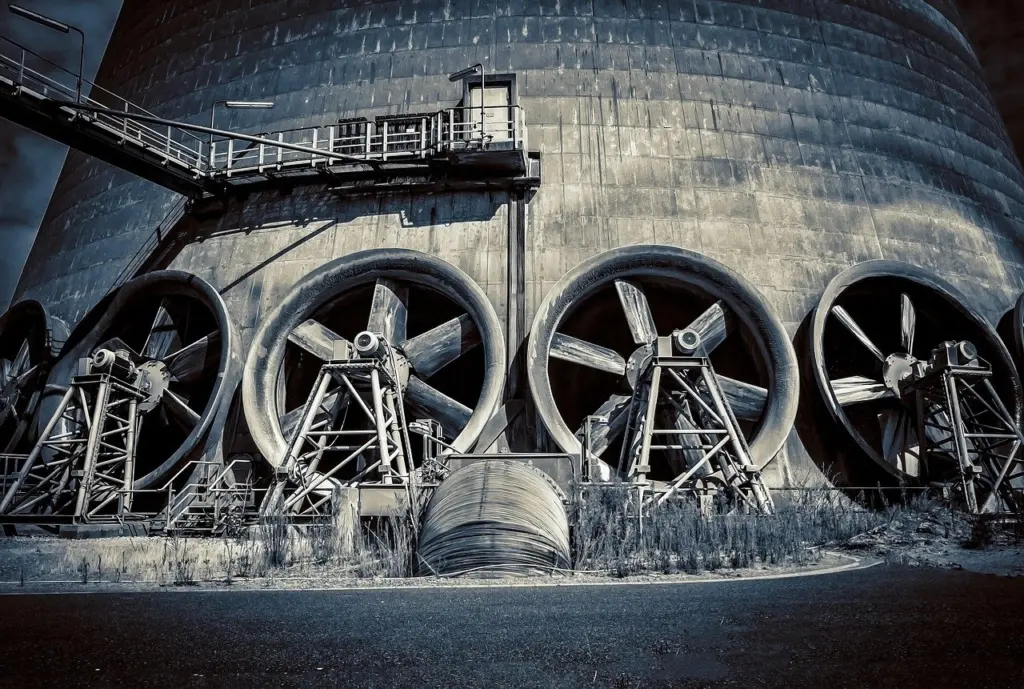
The choice depends on the site. In a water-stressed basin with a clean, low-water electricity supply, air or immersion cooling is the safer bet despite the energy cost. In a water-rich region with constrained power, evaporative cooling can be defensible. The mistake is to pick on energy efficiency alone and discover the water cost later.
Practical ways to reduce AI-related water use
Reducing AI’s water footprint combines facility choices, model choices and disclosure, and the right mix depends on where the compute runs.
- Match cooling to local water. Where supply is tight, favor air or immersion designs over evaporative towers, and accept the extra energy as the price of lower water loss.
- Screen sites for water first. Hot climates and summer demand peaks raise risk, so check peak-season supply before committing to a location.
- Cut energy per task. Since the estimated per-use water figure includes electricity-generation water, using smaller models or avoiding unnecessary queries reduces the indirect layer too.
- Choose lower-water electricity. The indirect layer dominates, so power sourcing deserves as much attention as cooling.
- Demand comparable disclosure. Ask providers for water metrics with stated scope, and write them into procurement terms while formal rules remain mostly voluntary.
Frequently asked questions
How much water will AI use in the future?
Global AI demand is projected to account for 4.2 to 6.6 billion cubic meters of water withdrawal in 2027, according to the Office for the Water Project report. The IWA expects AI’s water and energy demand by then to be comparable to that of a country like the Netherlands.
What have Google and Microsoft pledged on water?
ELI says major hyperscalers like Google and Microsoft have pledged to become Water Positive by 2030, meaning they would return more water than they consume. Pledges are only as useful as the reporting behind them, which is why inconsistent disclosure limits independent checking.
Why can’t cooling towers simply reuse the same water?
Cooling towers can only recycle water a handful of times, according to the Office for the Water Project, so they still need a steady supply of fresh water.
Does making AI chips use water too?
Yes. ELI states that producing a single microchip requires 2.1-2.6 gallons of water, which adds a manufacturing-side footprint on top of data center operations.